E-Safety
The internet
The Internet has become an integral part of children’s lives, enabling them to undertake research for school projects, talk to their friends and access information from around the world. Increasing provision of the Internet in and out of schools brings with it the need to ensure that children are safe.
Internet development is constantly evolving into ever more innovative areas with many websites enabling amazing creativity and interaction between peers. Unfortunately though, there are times when Internet use can have a negative effect on children. Schools and Parents need to be aware of the potential dangers and take measures to ensure safe usage by all.
At home
Parents can have a difficult job keeping up with their children on the fast changing technology available to them, let alone knowing the dangers they face. The issues of safety, privacy, on-line predators and cyber bullying are sometimes complex, both technically and psychologically and parents can struggle to keep up.
To help parents we have put together a selection of links to websites that will help them to ensure that their children can reap the benefits of the Internet while staying safe.
Think U Know – http://www.thinkuknow.co.uk
BBC Stay Safe – http://www.bbc.co.uk/cbbc/topics/stay-safe
Kidsmart – http://www.kidsmart.org.uk/
Childnet International – http://www.childnet-int.org/
Digizen – http://www.digizen.org/
Think U Know Parents – http://www.thinkuknow.co.uk/parents/
Google Family Centre – http://www.google.com/familysafety/
Intenet Matters – https://www.internetmatters.org/resources/social-media-safety-checklist/
At school
At school we take several steps to ensure that children are kept safe, while using the internet and electronic communication, they include:
Filtering to prevent access to websites that are not suitable or may be dangerous.
Monitoring allows us to review user activity online and intervene where necessary.
Internet access is supervised and we monitor the websites that are accessed.
A controlled email system is used where steps are taken to block unsuitable emails and identify possible cyber bullying.
Children are also taught how to use the technology safely so that they can keep themselves safe.
Social Media and Messaging Apps
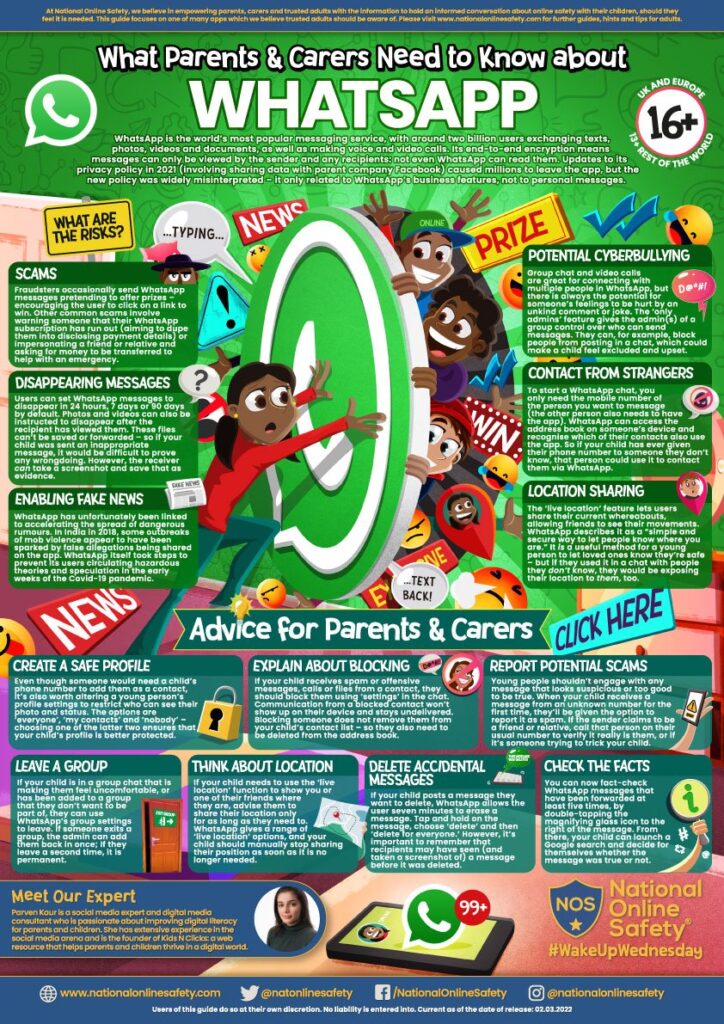
Messaging apps and social media can expose children to situations they are not emotionally or developmentally ready to manage, including unkind behaviour, inappropriate language and online bullying. Primary‑aged children need close adult supervision when using phones and online platforms.
We strongly encourage parents and carers to regularly check devices, talk openly with their child about online behaviour, and set clear boundaries around app use. Further practical guidance for parents on keeping children safe online, including advice about social media and messaging apps, can be found at Internet Matters: